Over the past years, I travelled to 50 countries as a freelance photographer for the unique Worldwide Bread Project, initiated by Johan Pater, third-generation family baker who led Koninklijke Amarant Bakkers from its roots in Avenhorn into a modern industrial bakery group and champions sustainability and innovation in the Dutch baking sector. My focus as a photographer was on bakers and bread, but the journey taught me far more than I expected. In this series of stories, I take you behind the scenes—into the moments that were never told, yet quietly shaped my perspective. In the navigation menu above, follow What the Road Revealed if you want to read more in future.
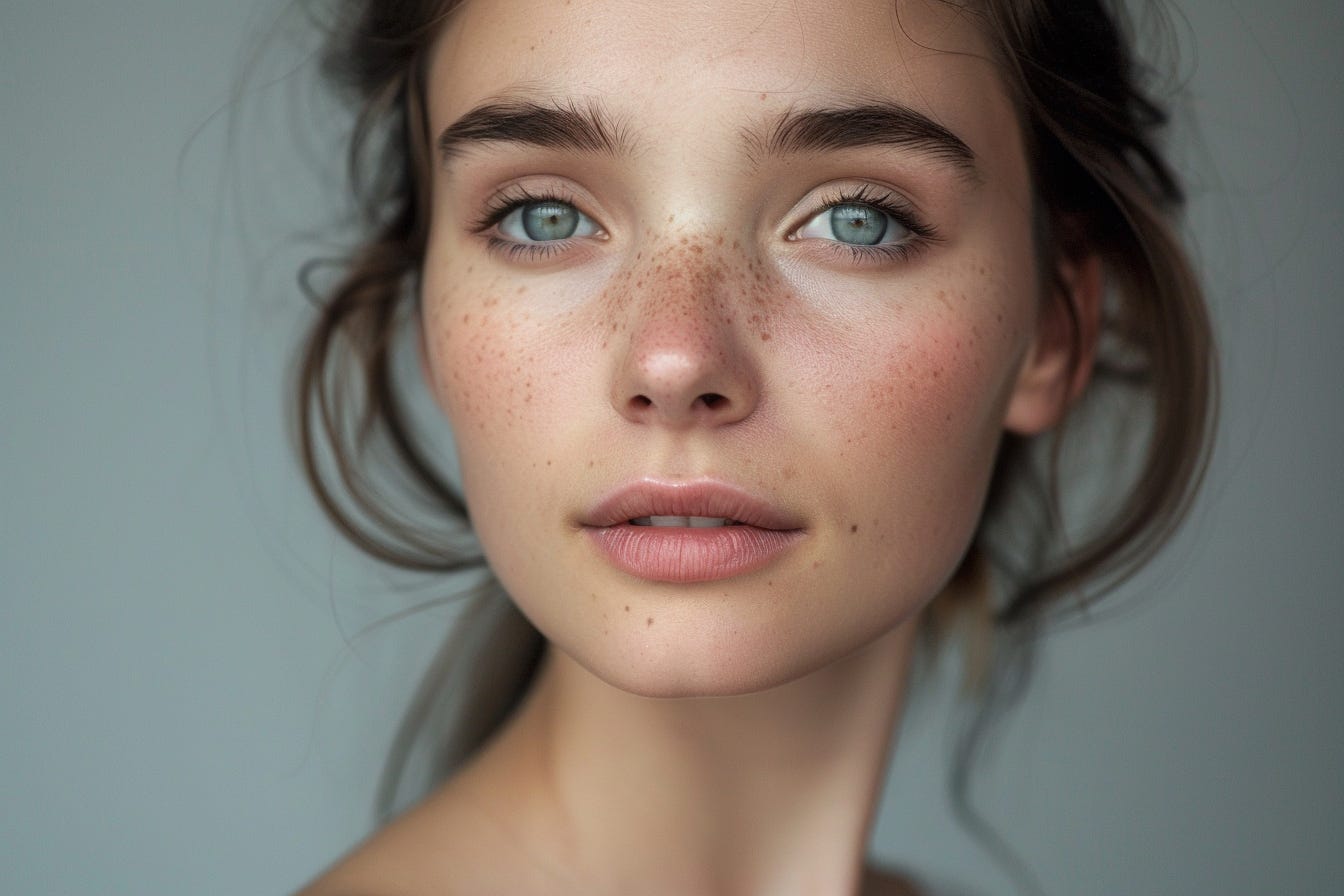
I asked ChatGPT for a prompt to to generate ‘the perfect woman’.
What came back wasn’t a person. It was a spec sheet: symmetrical features, clear skin, soft curves held within acceptable bounds, neutral background to avoid distraction. No scars, no lines, no history. Just a frictionless surface designed to please everyone and offend no one.
This is what we’ve done to the word perfect. We’ve turned it into a sanding-down. A removal of anything that might catch the light wrong, provoke discomfort, or resist easy consumption. Perfection used to imply completeness—something whole, realized, itself. Now it means the opposite: something so stripped of particularity that it could be anyone, which means it’s no one.
And we apply this template ruthlessly. To bodies, yes—but also to personalities, to life trajectories, to entire identities. We’ve built industries around the promise of optimization: smoother skin, cleaner routines, more productive mornings, better versions of ourselves. The language is always improvement, but the direction is always the same—toward a ideal that looks less like flourishing and more like compliance.
The result is a culture that feels increasingly flat. We know what the ‘right’ answer looks like before the question is even asked. We know which bodies get celebrated, which stories get amplified, which kinds of women get to be visible. And we know, even if we don’t say it out loud, that this template isn’t neutral. It’s shaped by commercial interests, colonial aesthetics, and the narrow vision of whoever holds the camera.
So when I think about perfection now, I think about what gets erased in its pursuit. The textures that don’t photograph well. The beauty that doesn’t translate to a grid. The women who live outside the frame entirely—not because they’re lacking, but because the frame was never built for them.
The AI prompt: ‘Photorealistic portrait of a young woman representing contemporary global beauty standards. Symmetrical facial features, clear skin, natural makeup, soft daylight, neutral background. Calm expression, minimal styling, high-resolution professional photography look, shallow depth of field, extremely detailed skin texture, natural color tones’.
Unexpectedly liberating
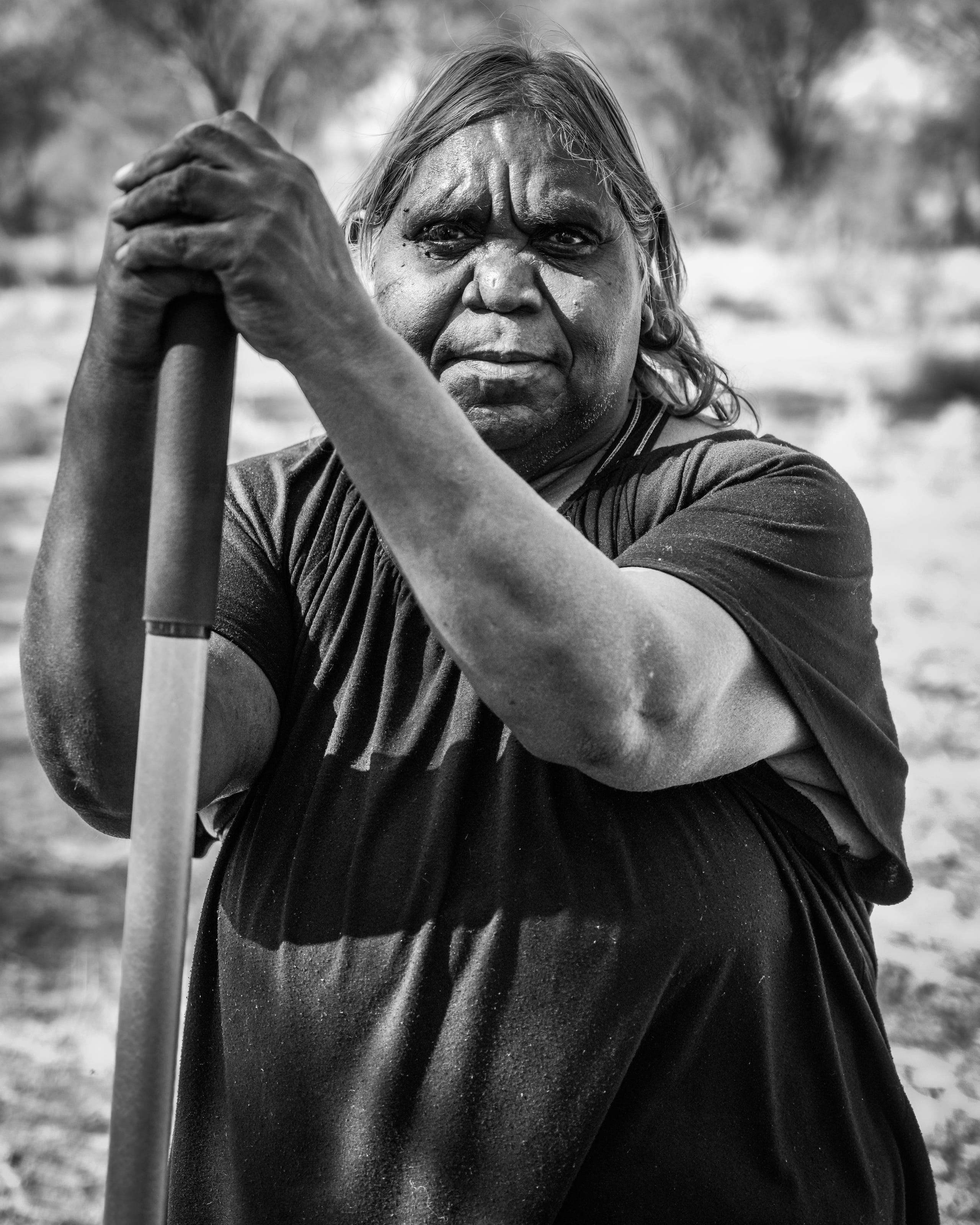
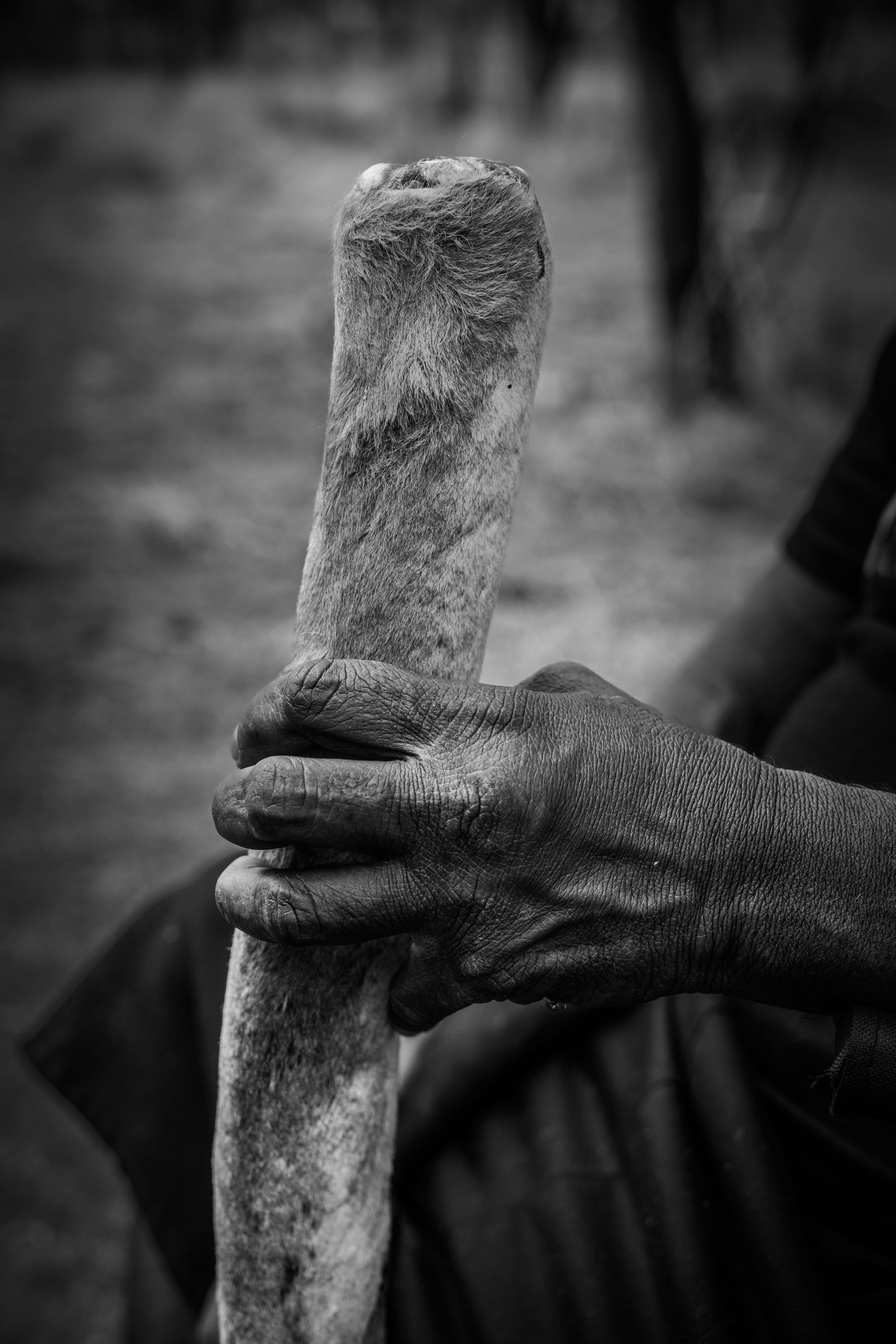
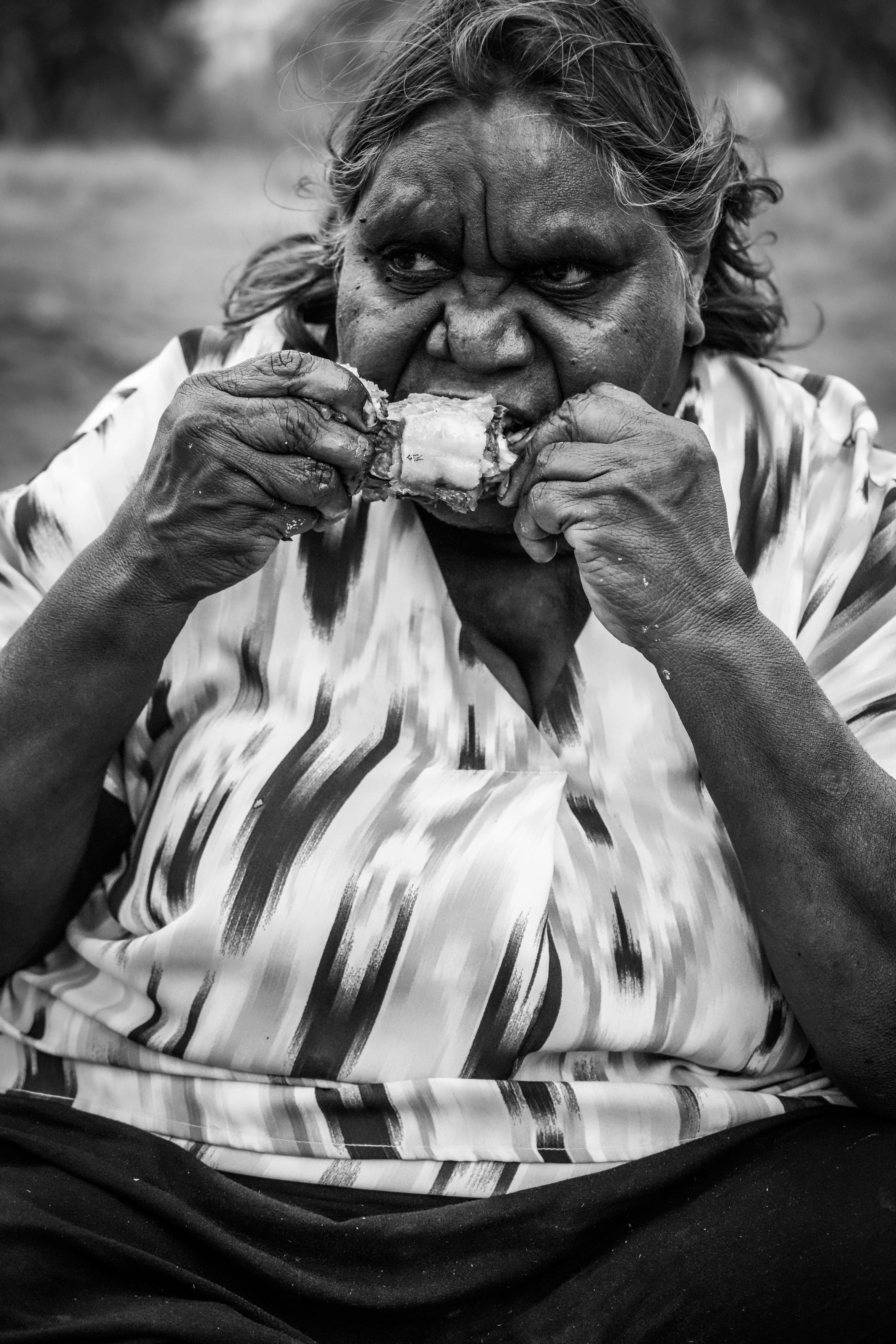
In the remote outback of Australia, I met a group of Aboriginal women who welcomed me into their world with quiet generosity. I was kindly invited to sit with them, to share freshly baked bread, kangaroo tail roasted over the fire, and sweet black tea. Out here, the usual social niceties around food fade into the background—when you dig a hole in the red desert sand, collect dried bushes to keep the fire going, and bake the bread yourself, hospitality is measured in action, not formality.
These women don’t fit the dominant image of what femininity is supposed to look like. They live far from gyms, fashion stores, and wellness culture. Their beauty isn’t polished or filtered—it’s lived, weathered, and deeply rooted in land, community, and stories.
Through these portraits, I want to question the narrow visual language that so often defines what it means to be feminine. Who gets to be seen as ‘woman enough’? Who shaped that image—and who is excluded by it?
The women in The Shape of Her (work in progress) carry a strength that isn’t for show. It’s practical, ancestral, unspoken. Being among them—unfiltered, unapologetic, and unshaped by the gaze of the outside world—felt unexpectedly liberating. Despite the deep injustices and poverty they endure, their presence offered something rarely found in today’s curated culture: a quiet kind of freedom. It’s a reminder that perhaps we have more to learn from them than from the so-called influencers who define our screens.
CARTE BLANCHE | where light leads is a reader-supported publication. I’ll be moving these articles behind a paid subscription in the future, but there’s no pressure — for the price of a simple coffee in a restaurant each month, you’ll have access to all posts. If you’d like to follow along and support the work, you’re welcome to subscribe for free or choose the paid option.
You may be interested in this too: Yesterday I heeled in 250 young shrubs. Planting them will be done later — with some welcome help — but the first move has been made. These shrubs were donated to us by a foundation with a brilliantly fitting name: Aanpoten, which translates roughly to ‘get moving’ or simply ‘roll up your sleeves.’ No waiting for ‘everyone’ to finally realise how urgent the biodiversity crisis is. Just start. Get to work.