This morning I woke up to the sun. Spring bulbs pushing through the soil. A quiet garden.
And then I opened my phone.
CARTE BLANCHE | where light leads is a reader-supported publication. To receive new posts and support my work, consider becoming a free or paid subscriber.
Again. Still. Images of destruction, the same headlines, the same countries I know — not from the news, but from the inside. From narrow streets that smelled of cumin and woodsmoke. From kitchens where someone’s grandmother handed me something warm without asking if I was hungry, because of course I was, and of course she would feed me.
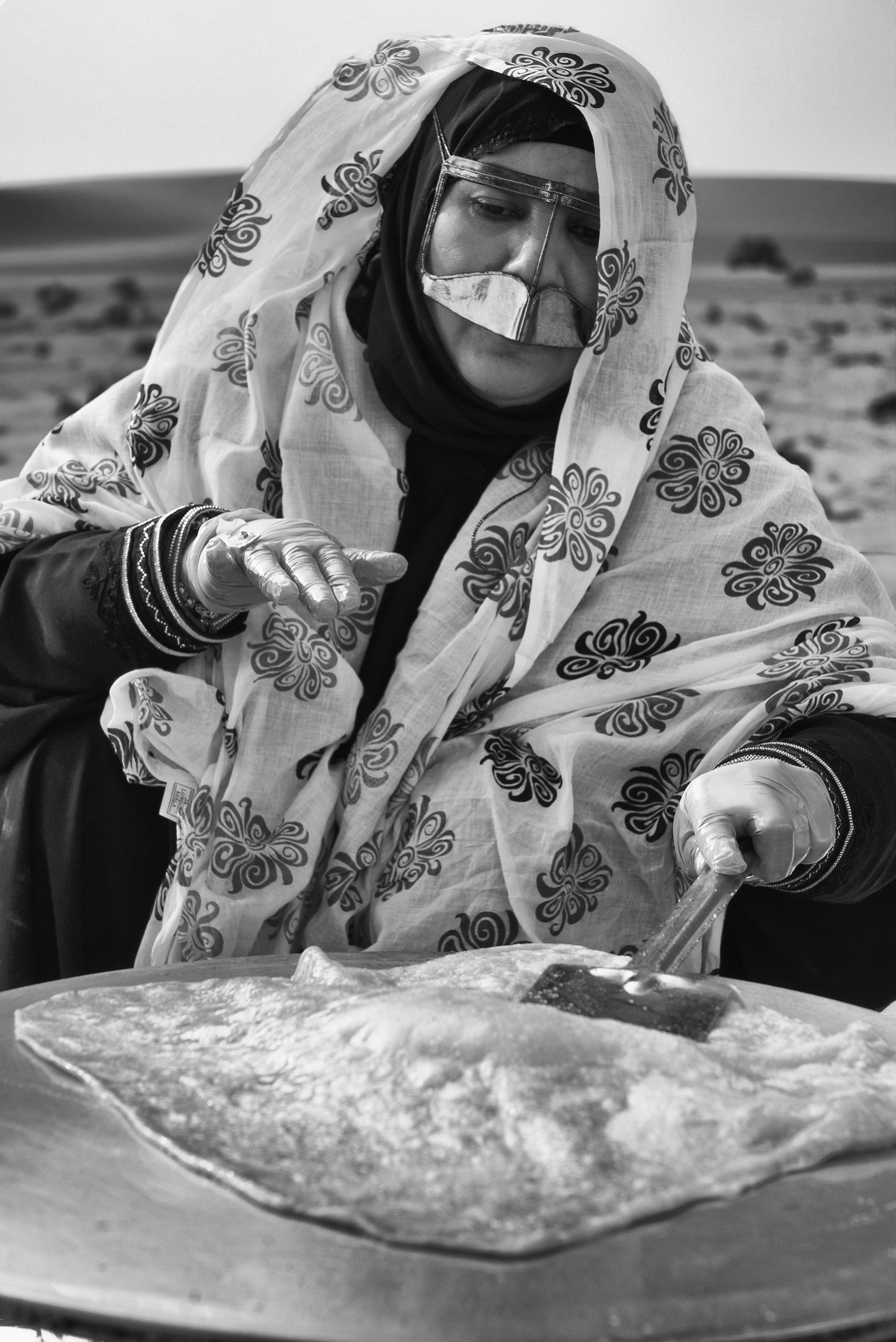
I have traveled extensively in several of the countries that are now, quite literally, under fire. I did so as part of a photography project that in hindsight was one of the most quietly radical things I’ve ever been part of: we followed bread.
That’s it. Bread.
And what bread does — what it has always done — is lead you straight to the most ordinary, decent people on earth. The baker who starts at 3am. The woman who slaps dough against the wall of a clay oven with a confidence that comes from forty years of doing exactly this. The family that insists you sit down, that pulls out an extra chair, that will not hear of you leaving without eating something first.
Tehran. Isfahan. Beirut. Tripoli. Dubai.
In each of these places, a camera pointed at bread meant a camera pointed at hospitality. At dignity. At people who had no interest in being symbols of anything — they just wanted to make something good and share it.
That is what I keep thinking about this morning.
Not because I’m looking away from the news. I’m not. I read it. I feel it. The weight of it is real.
But I’ve been asking myself what my role is in all of this, with my camera and my archive of images. And I keep coming back to the same answer: I don’t think my job is to add more pictures of destruction to a world already drowning in them. There are photographers doing that work, important work, necessary work. That’s not what I have.
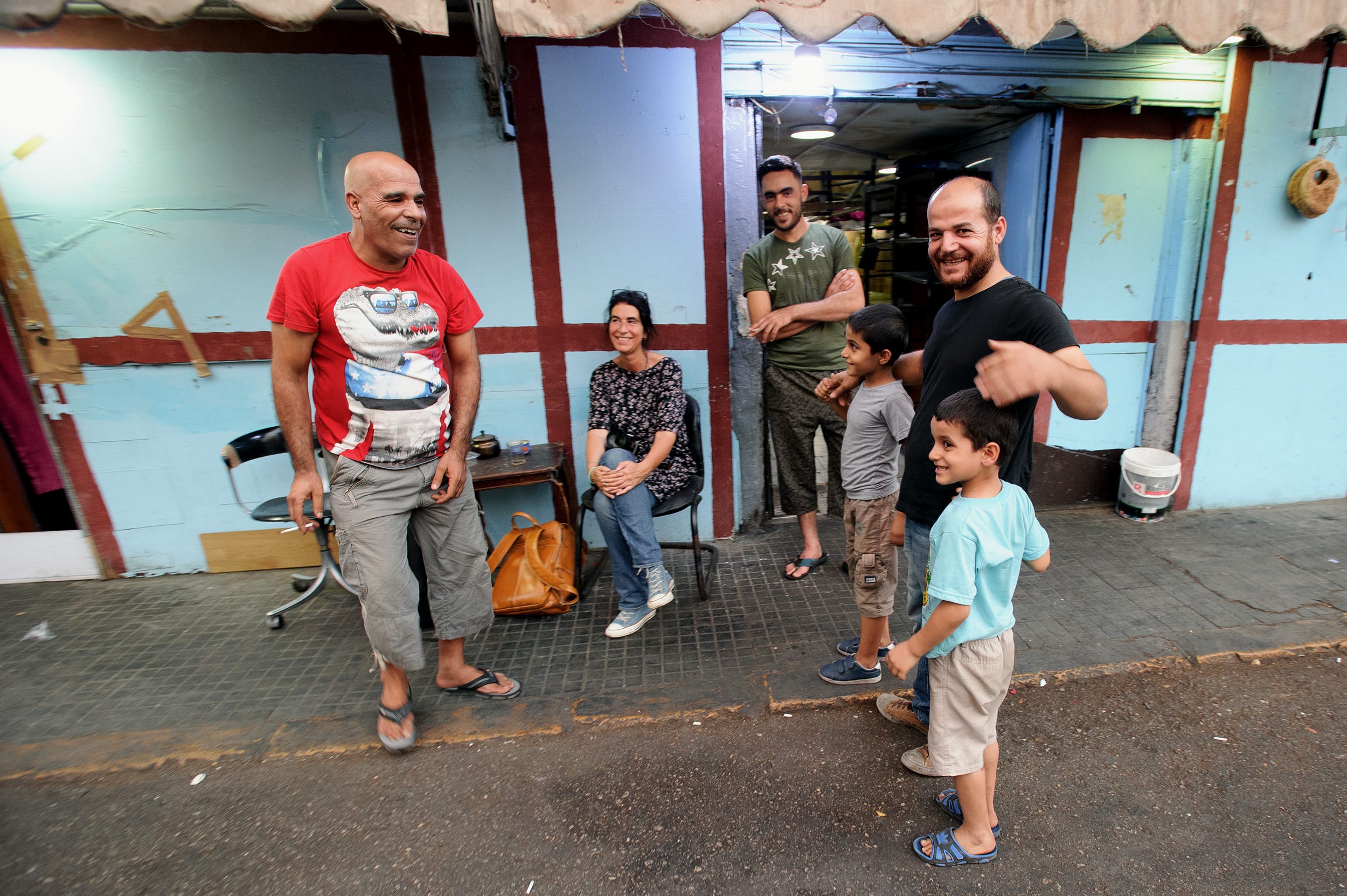
What I have are images of the other side. The baker. The chance encounter in a doorway. The peaceful courtyard you stumble into by accident. The colors of a market at seven in the morning. The interior of a home where someone was clearly, carefully proud of every object on the shelf.
So today I’m sharing a random selection of those images below. People, moments, small pieces of beauty from countries that are now under fire. Not as a statement. Not as a counter-narrative or a political act. Just as a reminder — for myself as much as anyone — that this is what is also there. This is what exists. This is what is worth protecting.
Because if we only ever look at what is being destroyed, we risk forgetting what destruction actually costs.
I want to keep my world. The one I found through a lens, through bread, through an open door. I want to keep the baker, the garden, the grandmother with flour on her hands.
Let me keep that.
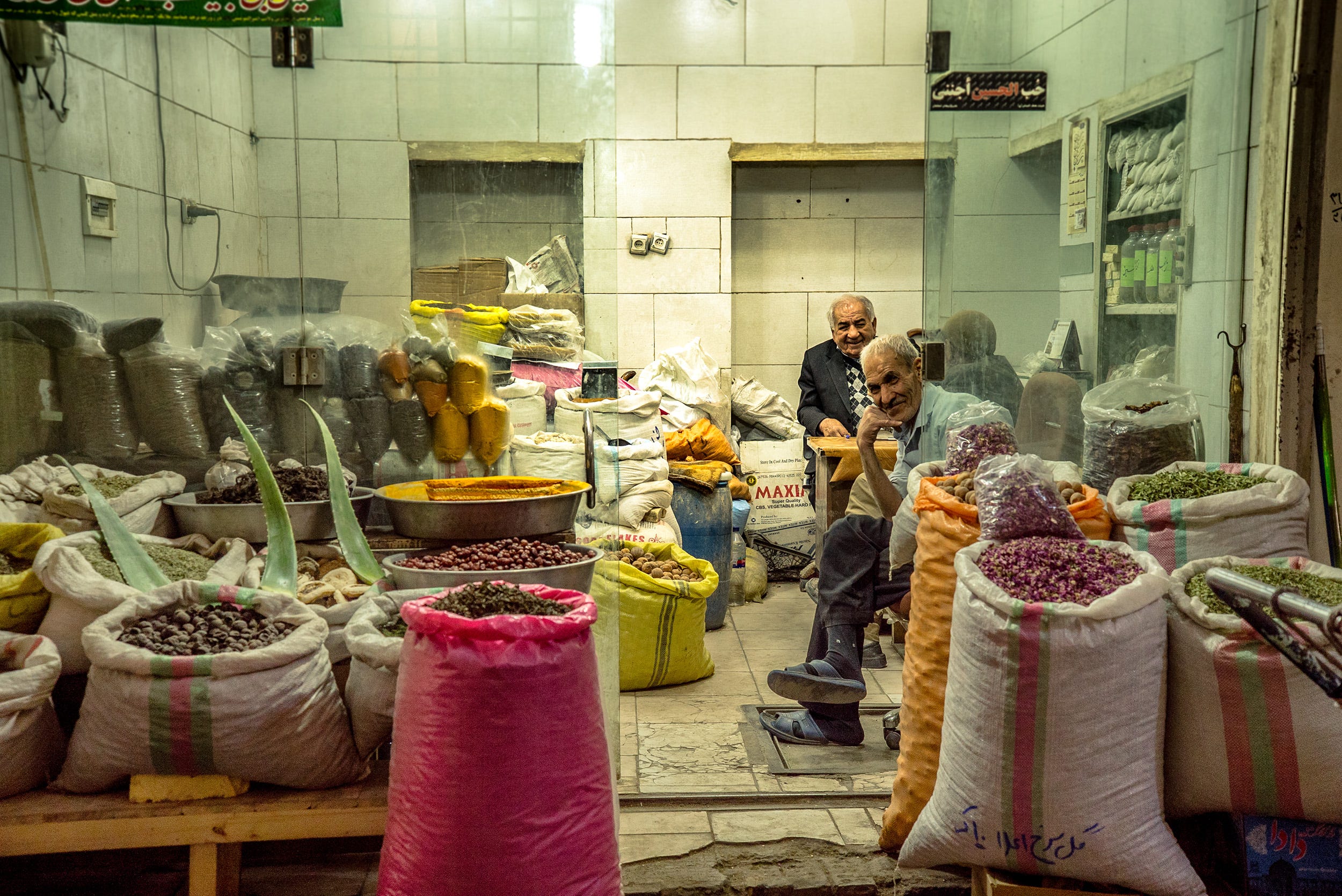
Two men, a thousand spices, and the best conversation of the day. Somewhere in those sacks: the dried rose petals we’ve been putting in our tea and scattering over cakes ever since. Isfahan market, Iran.
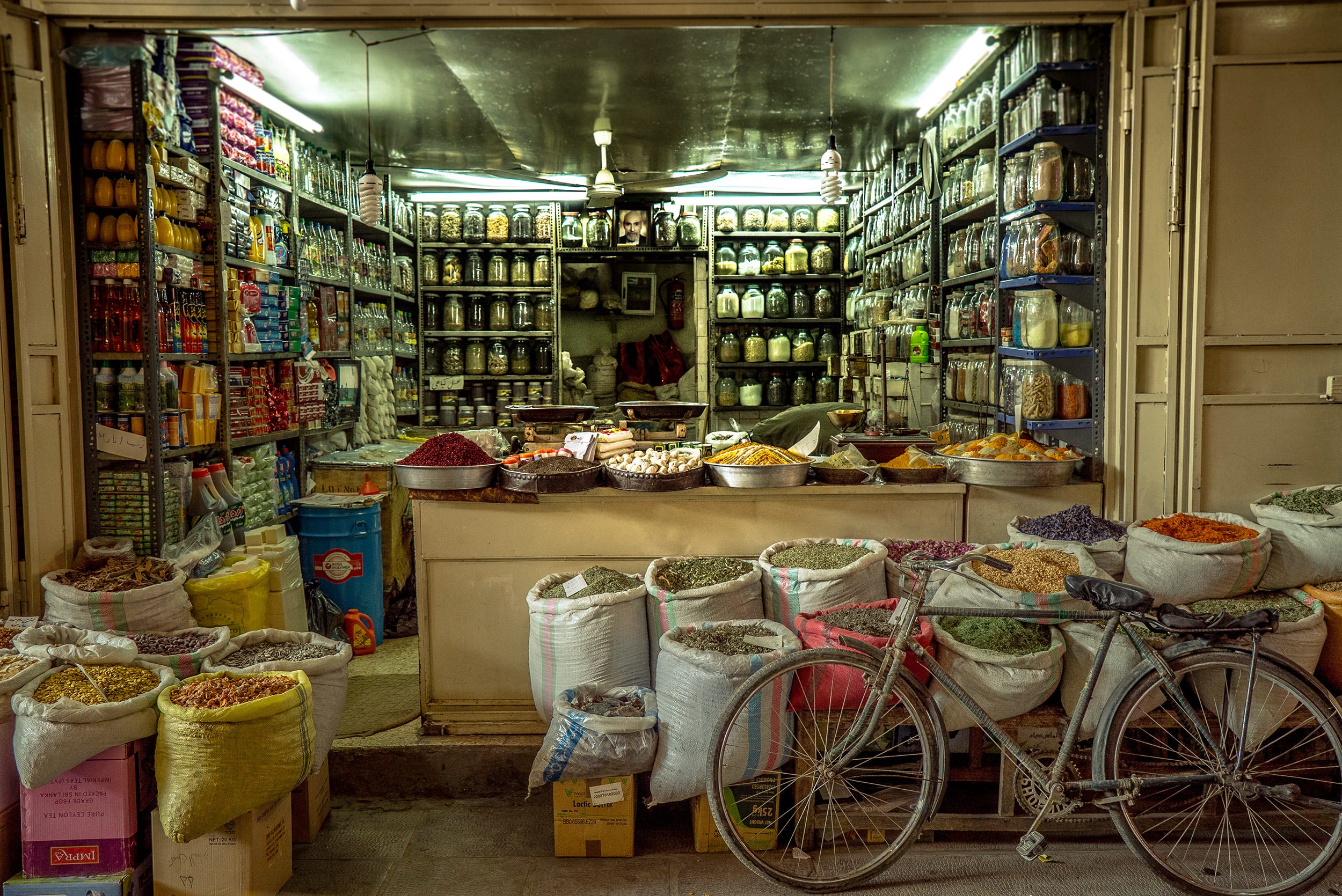
A spice shop in Isfahan market that made us want to throw all common sense out the window. We wanted everything — the teas, the nuts, the honey, the dried fruits, the flowers, a custom spice mix or three. We were already calculating bags in our heads when reality hit: a flight home, and a bag already hostage to camera equipment. We left with less than we wanted and thought about it for long. Isfahan market, Iran.
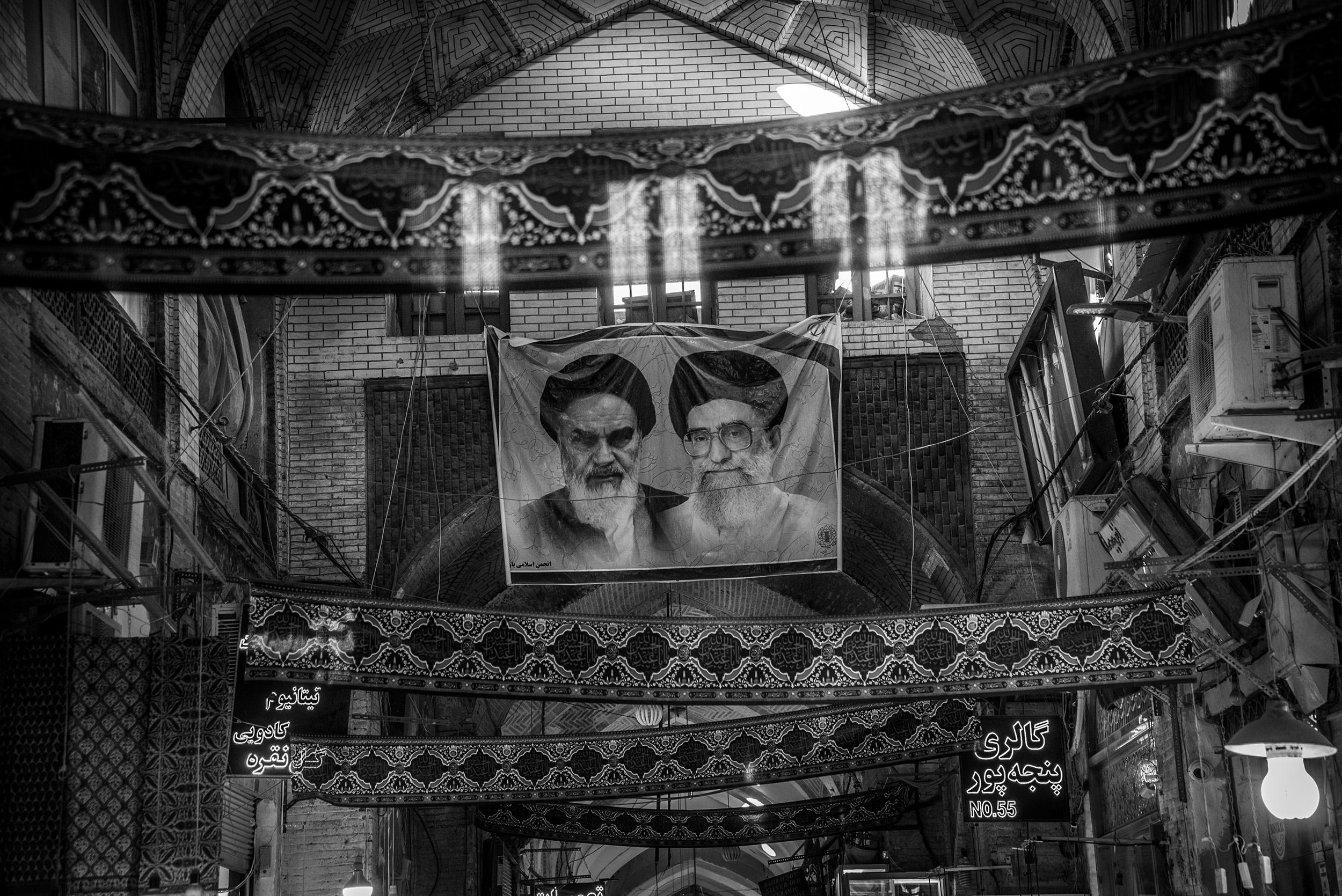
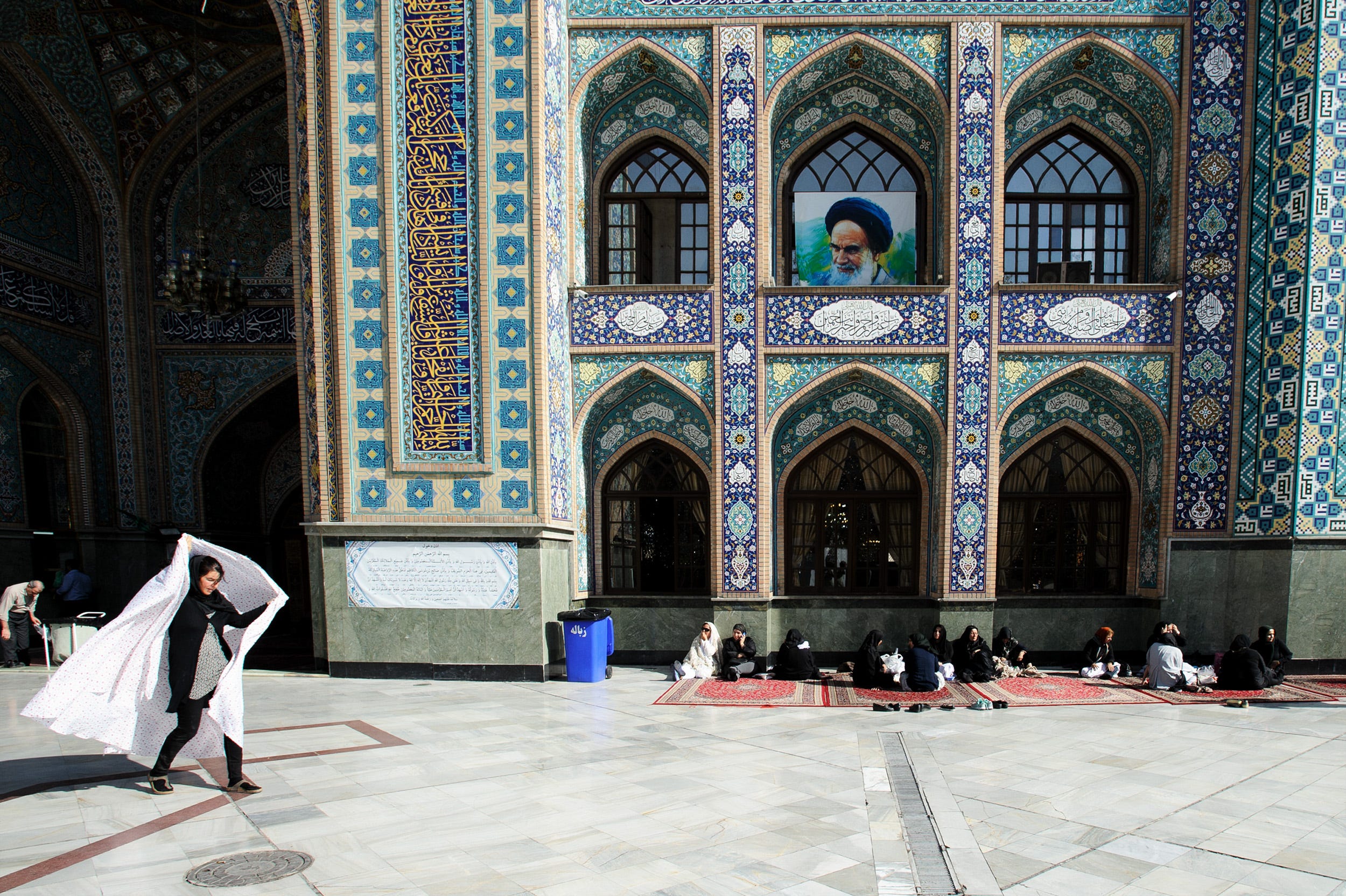
They are everywhere. Khomeini and Khamenei — watching over every market, every street, every transaction. You learn to see past them, the way the people who live here have learned to see past them. Below, life continues: spices are weighed, deals are made, tea is poured. Isfahan market, Iran.
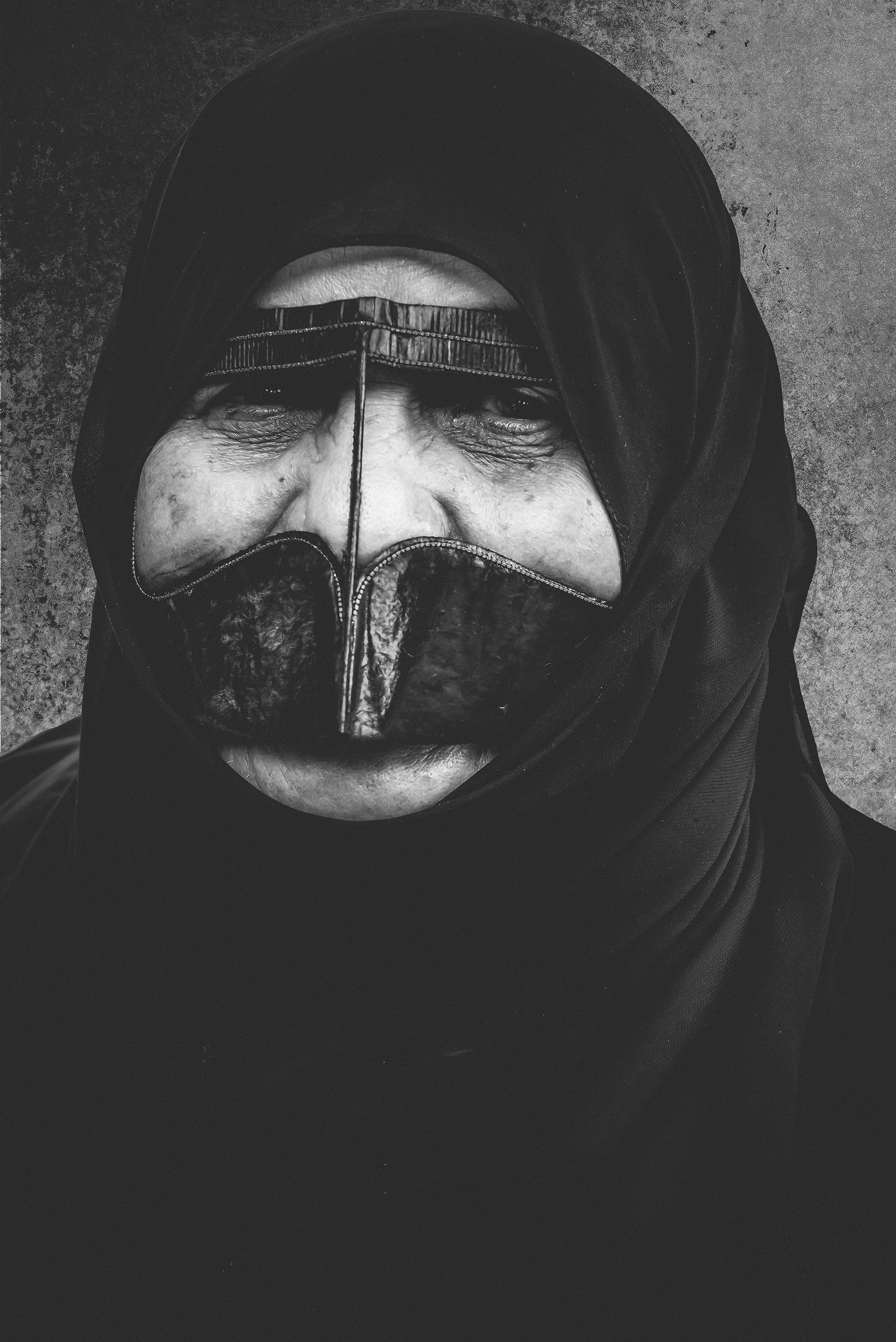
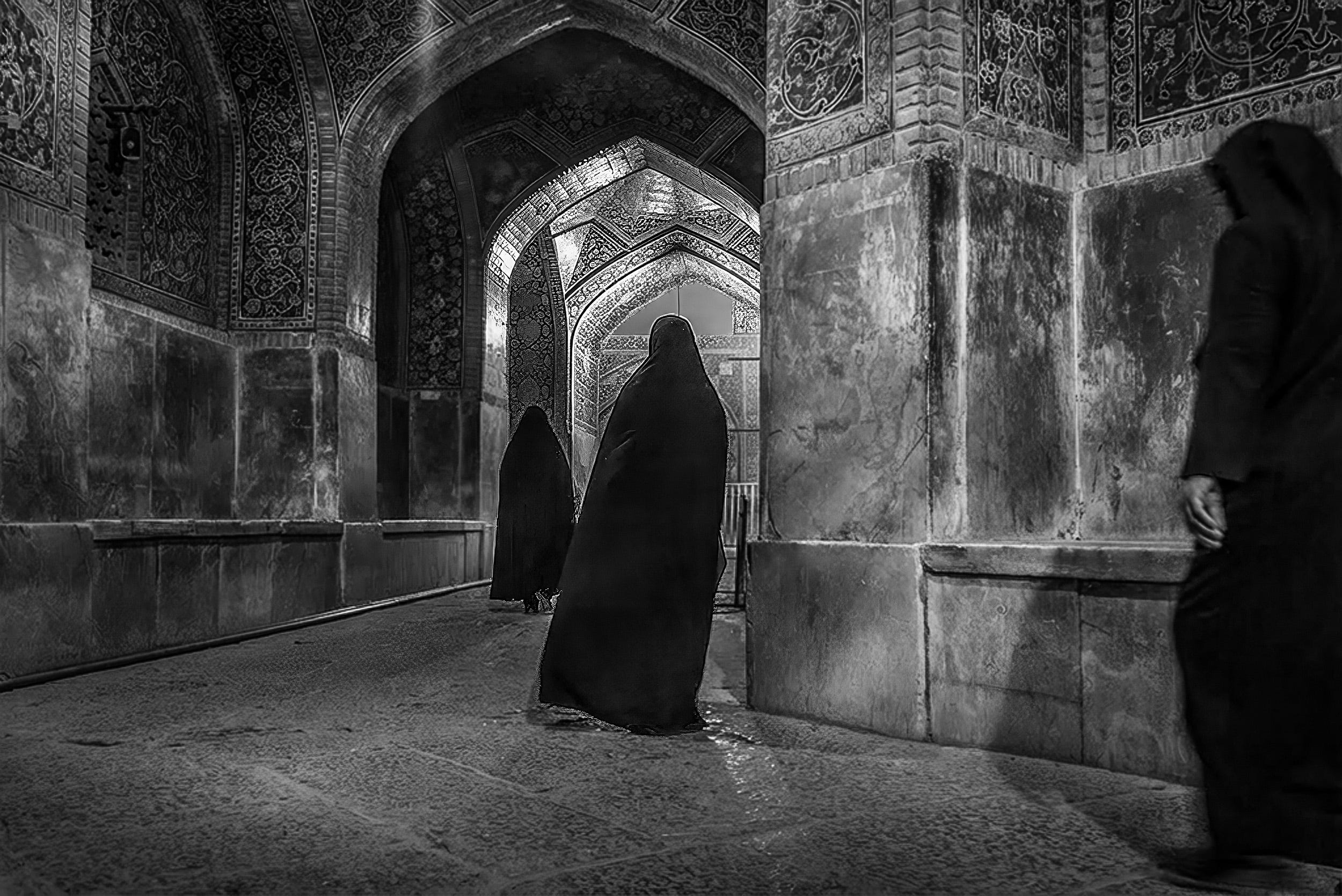
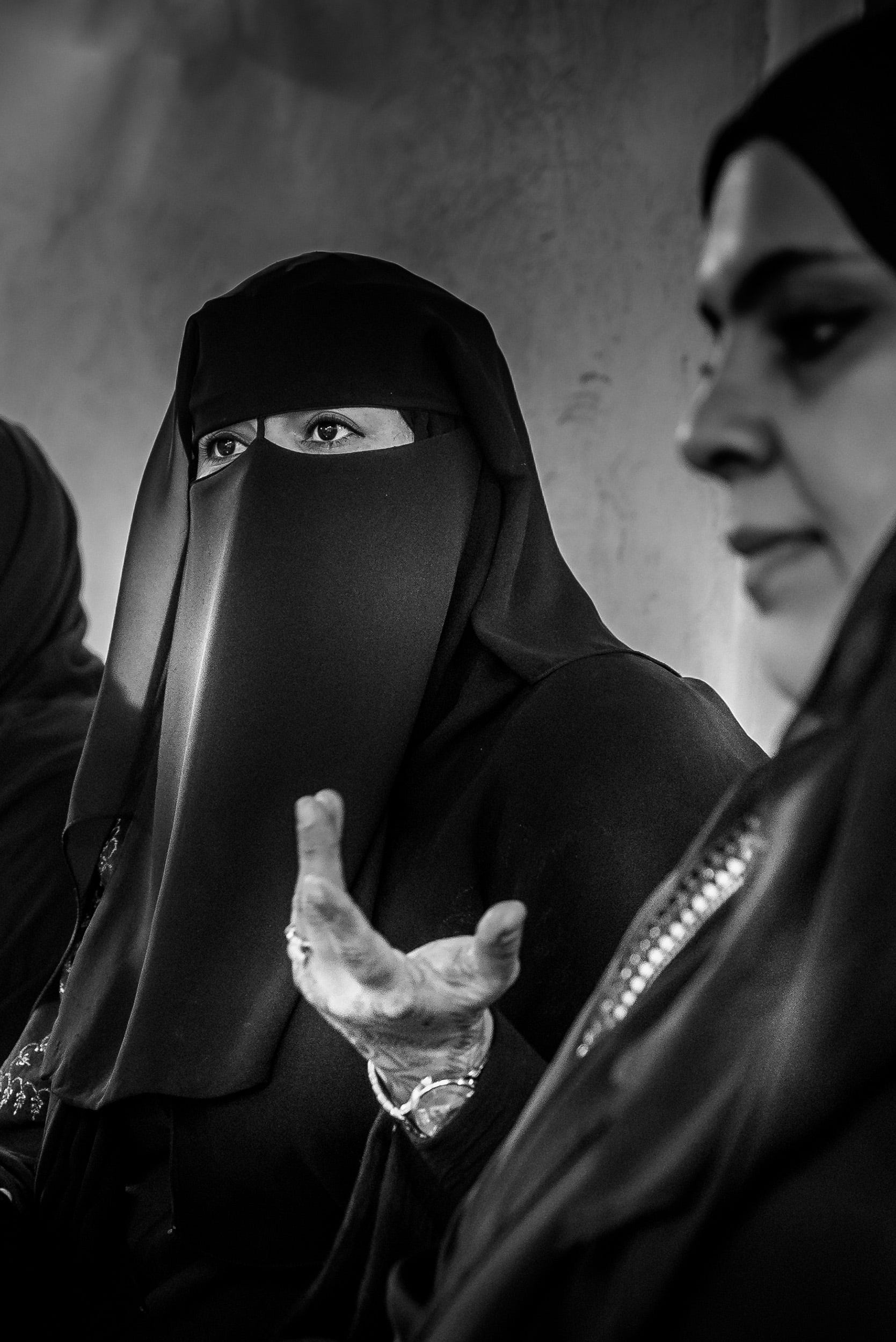
With Khamenei gone, what happens to the women of Iran? We catch fragments of what has been happening there — and even those fragments are incomprehensible. The brutality. The silence that was demanded of them. And yet they kept going into the streets. That kind of courage is equally incomprehensible, in the best possible way. We don’t know what comes next. Nobody does. What we know is this: behind every chador is a woman with a life, an opinion, a fury, a tenderness, a plan. The architecture is breathtaking. The women walking through it — more so. Imam Mosque, Isfahan, Iran.
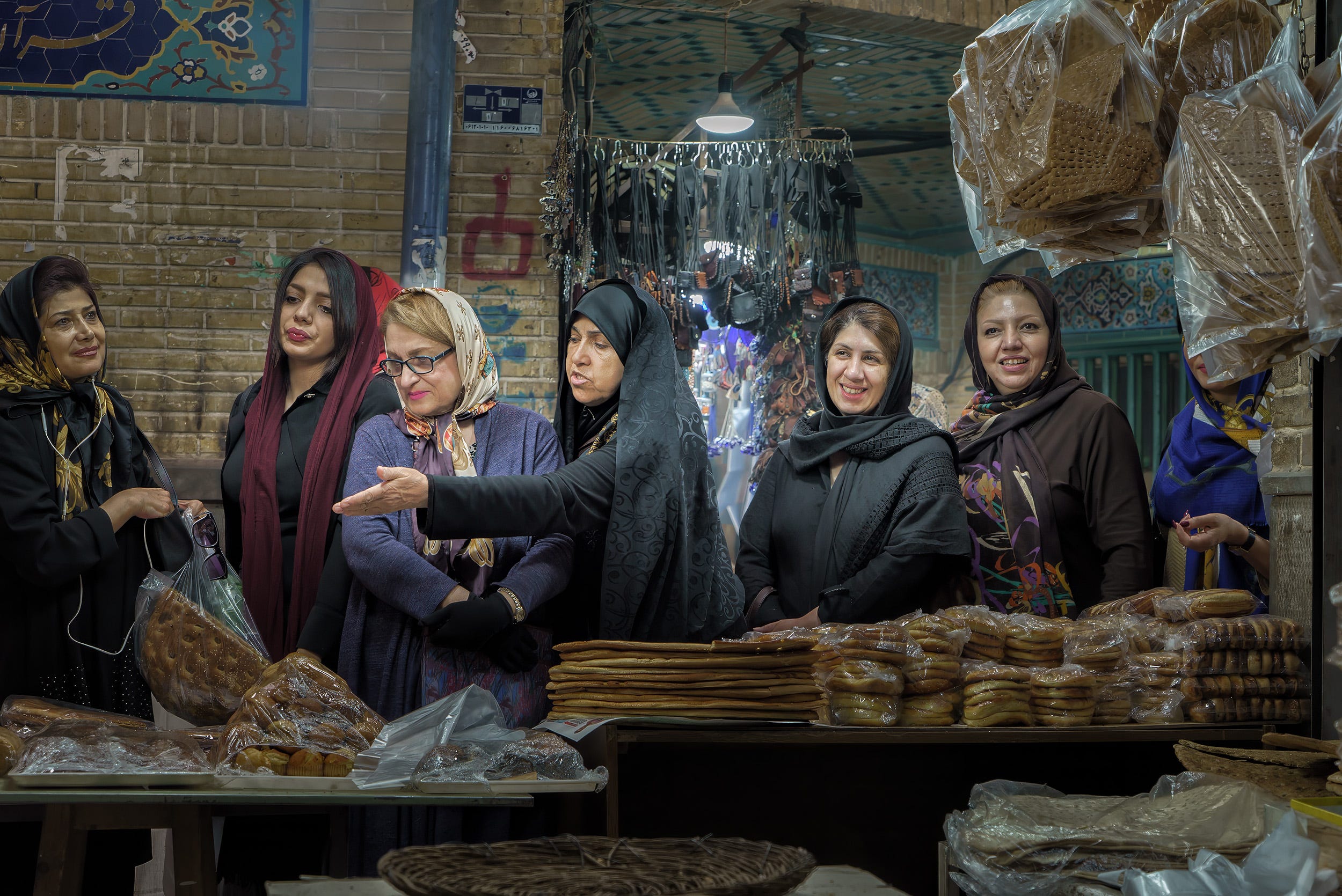
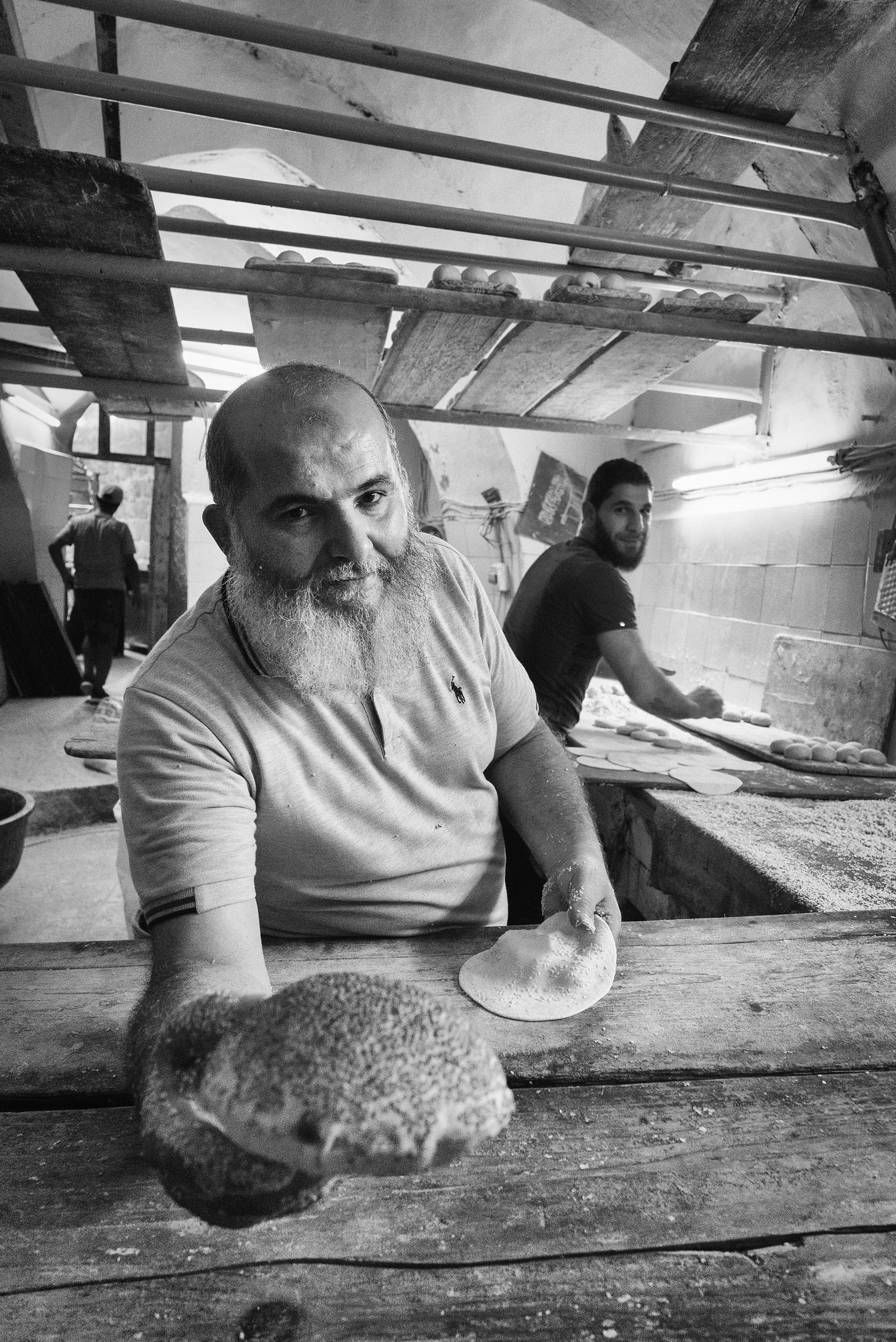
‘Here. Take it. Put that camera down for a second.’ We put the camera down. We took the bread. It was warm and it was the best thing we’d eaten all day and he knew it and smiled like a man who has been right about this his whole life. Tripoli.
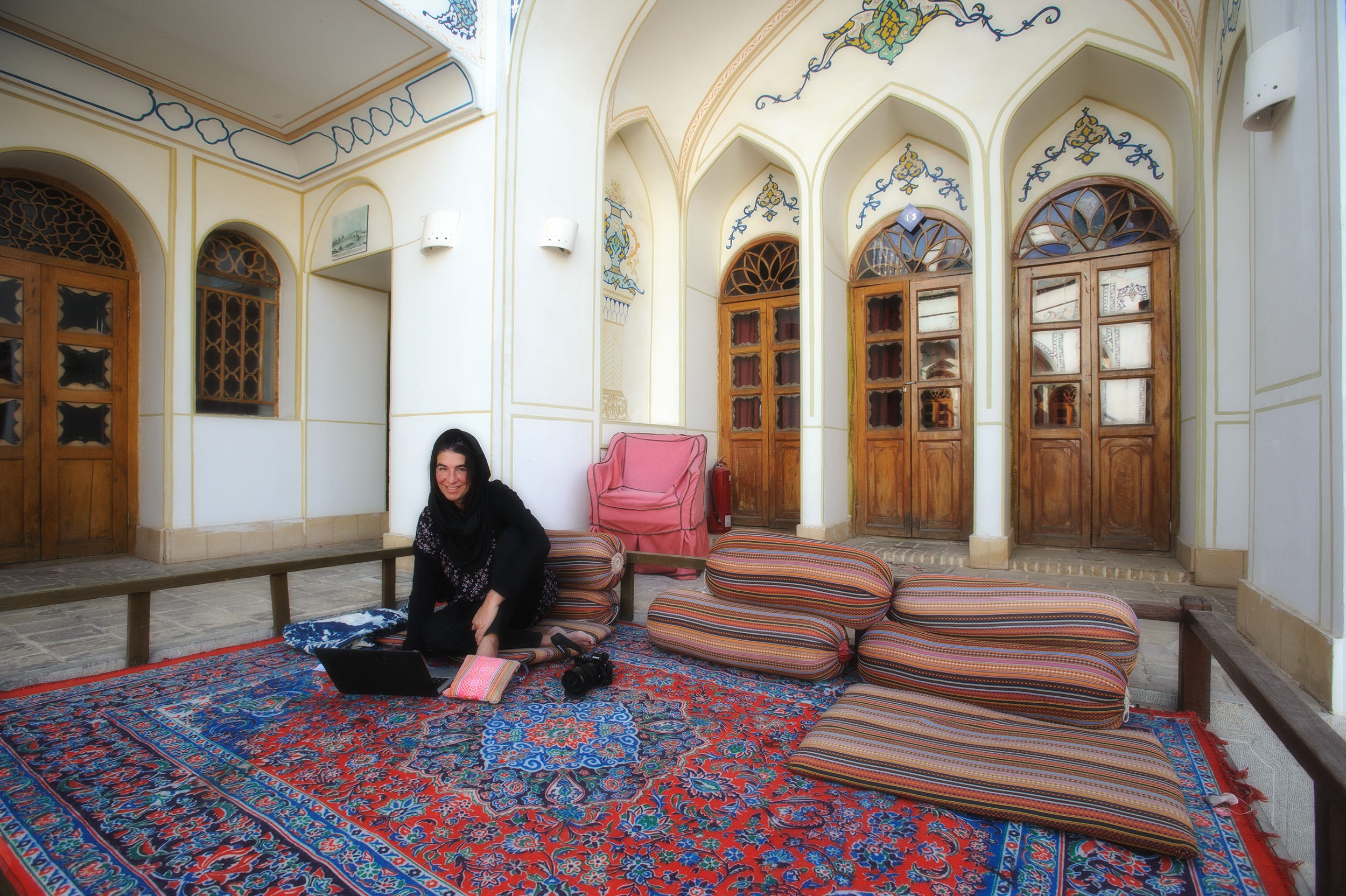
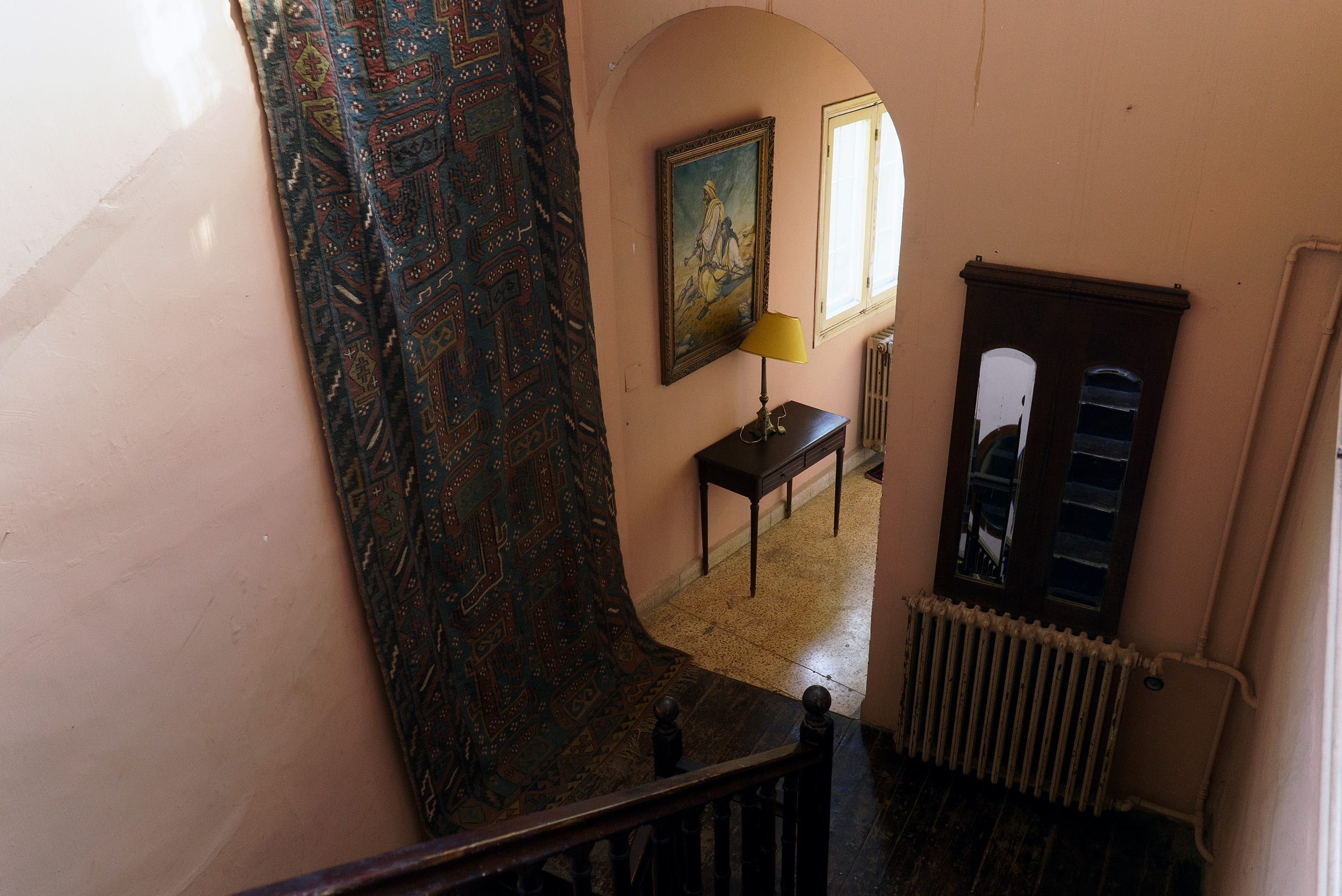
We came for the bread. But Lebanon kept ambushing us with its interiors. Every guesthouse, every stairwell, every forgotten corner with a lamp and a carpet and a painting that had been hanging in exactly that spot for fifty years. And then the teahouses. Dear god, the teahouses. We lost count of the times we stopped mid-sentence to reach for the camera for entirely different reasons. At some point during this trip we seriously considered a career change. Interior photography. No early mornings, nobody hands you raw dough to knead. We stayed with the bread. But it was close.
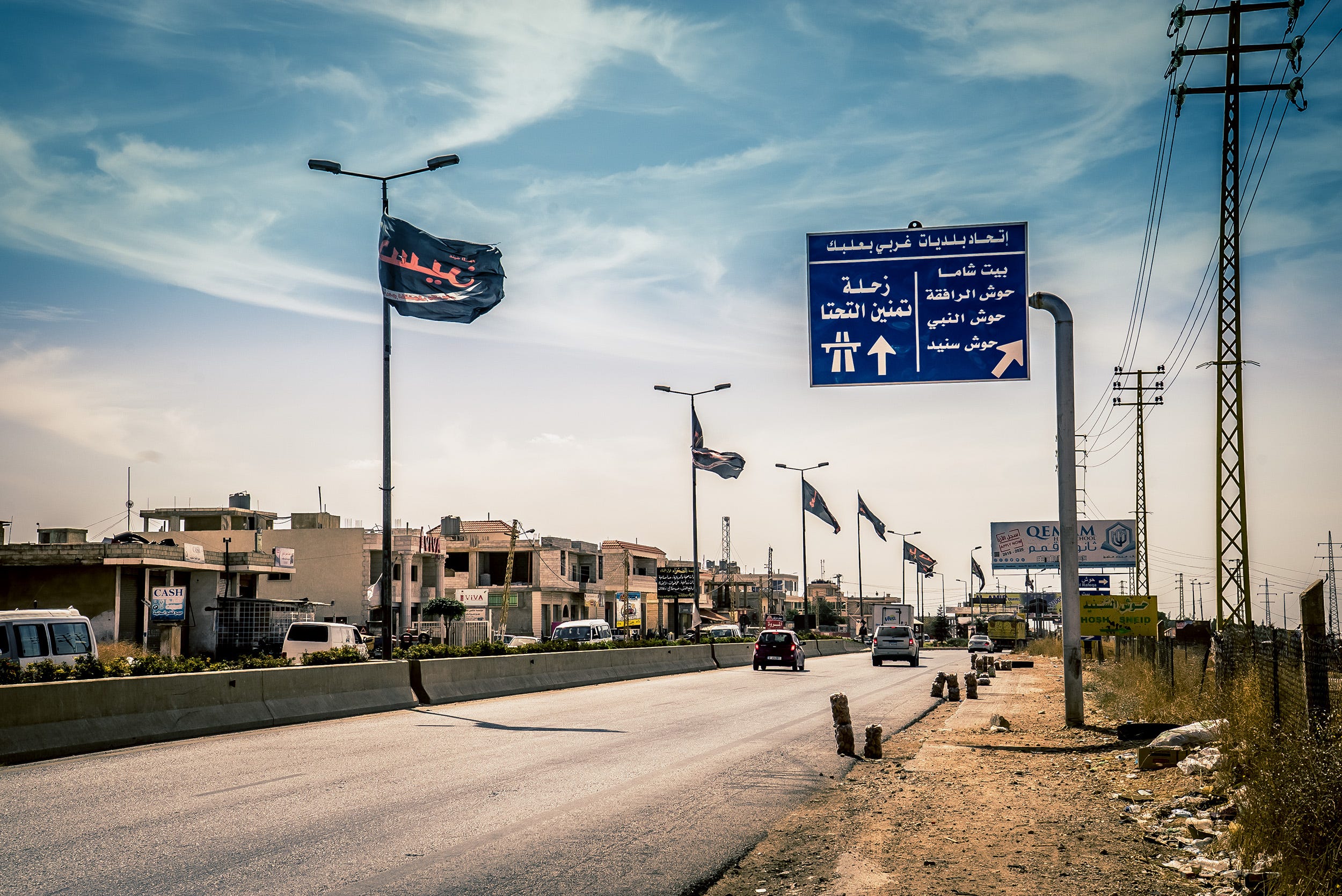
On the road in Lebanon. Rental car, zero Arabic, and a navigation system that was doing its very best and losing badly. Rush hour in Beirut we survived on adrenaline and blind faith. The open road was easier — until it wasn’t. But every single time we looked lost (which was often), someone appeared. Follow us. Turn here. And more than once: wait, take these dates for the road. Dates! For a couple of strangers who couldn’t read the signs. That’s Lebanon.
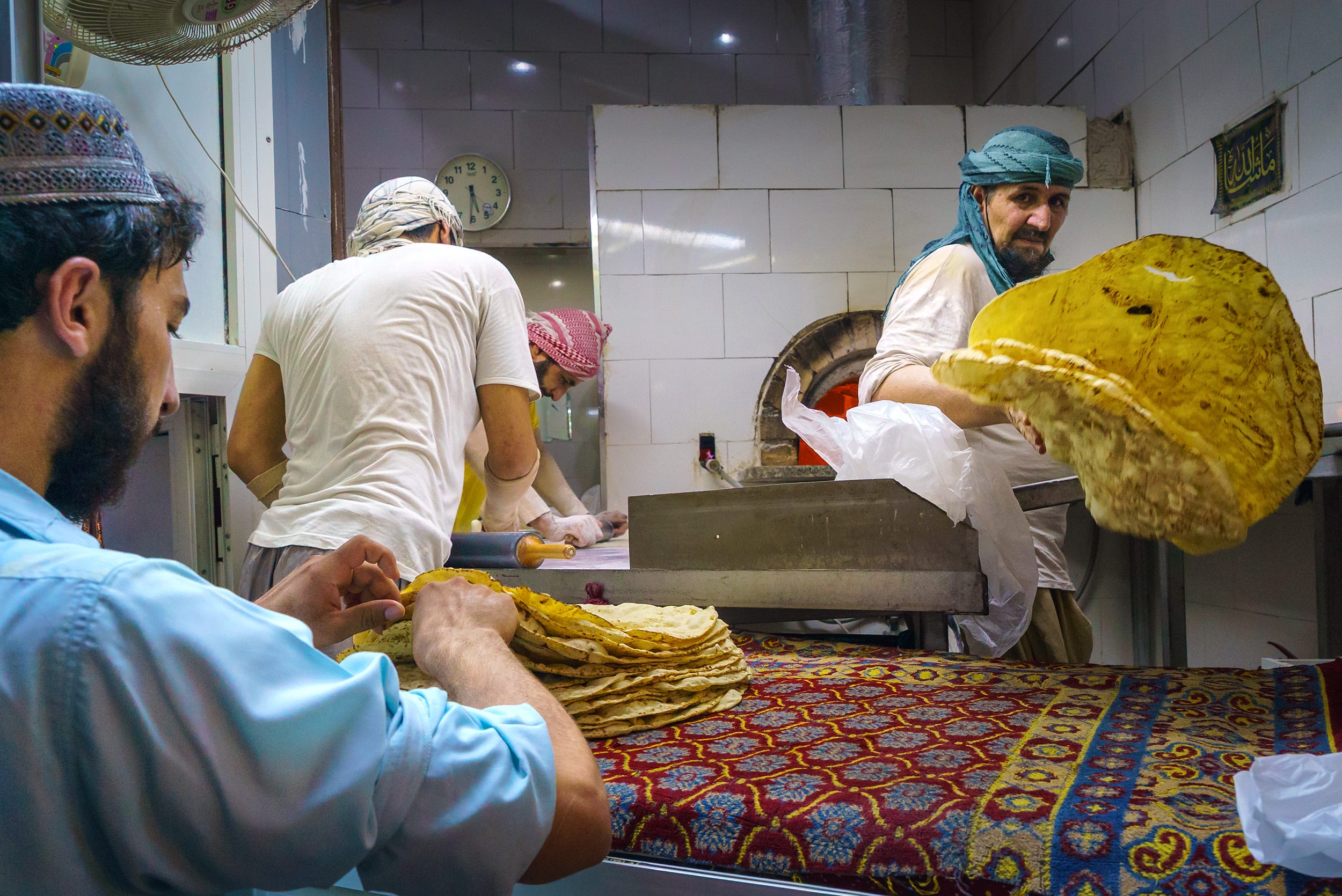
It took a few days and a considerable amount of patience before the Afghan bakers in the UAE were willing to talk to me. A woman. With a camera. Fair enough. What broke the ice was Hindi — a language we both happened to speak just enough. The moment they realised we could actually talk to each other, something shifted. Walls came down. Tea appeared. Stories followed. What came after were some of the most generous encounters. Mutual curiosity. Mutual respect. And bread, still warm, placed in our hands without being asked. It was never really about the bread. Dubai, UAE.
I could go on. And on. Because the stories are there, and so are the images.
But let me end with this.
Bread is made from four ingredients. Flour, water, salt, time. That’s it. And yet, every single time we walked into a bakery — in Teheran, in Beirut, in Tripoli, in Dubai — it opened something. A conversation. A story. A shared laugh. Hands that reached across a counter to give us something warm before we even asked.
Nobody was performing hospitality. Nobody was making a political statement. They were just baking bread. And we were just there, curious, trying not to judge before we’d even sat down.
We keep wondering: would the men who are currently deciding the fate of these countries — the ones with the beards, the ones with the USA caps, the ones with the podiums and the arsenals — would any of them have the patience to stand in a bakery for an afternoon and just listen? Just eat? Just be ordinary for a moment?
Bread won’t stop wars. I know that.
But we have never once left a bakery feeling like the world was beyond saving. There is something in the act of making bread — the patience it demands, the sharing it assumes — that the loudest voices in the room seem to have completely forgotten.
Four ingredients. A hot oven. Two people who don’t speak the same language.
It’s not nothing. It never was.
And on that note — my webshop is open today.
Limited edition Fine Art Prints. Images from Lebanon, Korea, and Tanzania. Face Not Included. Enjoy!
CARTE BLANCHE | where light leads is a reader-supported publication. To receive new posts and support my work, consider becoming a free or paid subscriber.