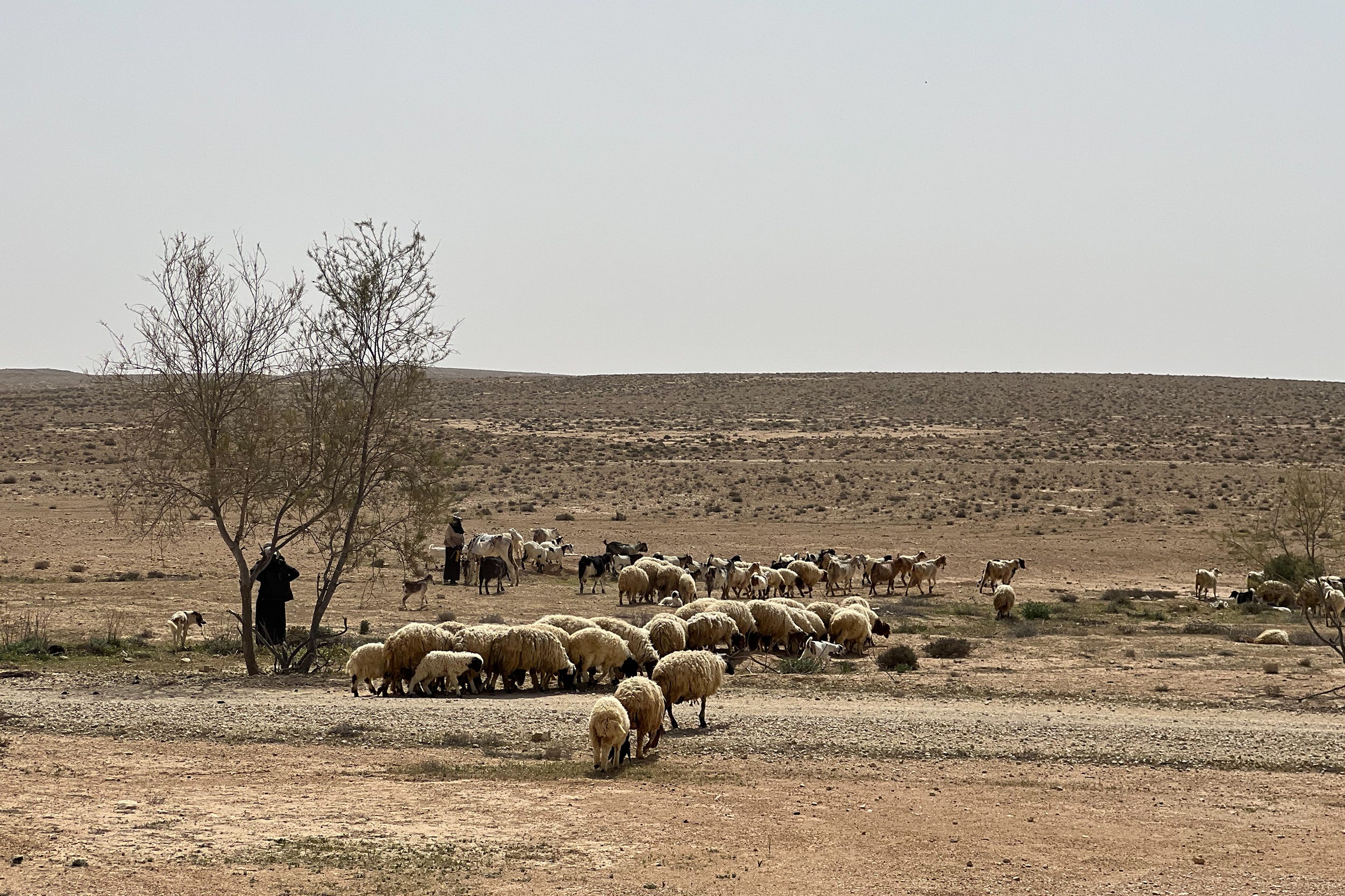
I saw them corner the sheep
How one brief news segment pushed me beyond my limits — and why I’m asking how you cope with the endless stream of violence we are shown.

Over the past years, I travelled to 50 countries as a freelance photographer for the unique Worldwide Bread Project, initiated by Johan Pater, third-generation family baker who led Koninklijke Amarant Bakkers from its roots in Avenhorn into a modern industrial bakery group and champions sustainability and innovation in the Dutch baking sector. My focus as a photographer was on bakers and bread, but the journey taught me far more than I expected. In this series of stories, I take you behind the scenes—into the moments that were never told, yet quietly shaped my perspective. In the navigation menu above, follow What the Road Revealed if you want to read more in future.
A Short Warning, Then a Breaking Point
On 21 November 2025, I was watching the Dutch NOS 20:00 news, as I do most evenings. I wasn’t expecting anything unusual. I’ve been following the news — Gaza, the West Bank, Ukraine, Sudan, Trump, the shifting conflicts that define our era — and I thought I had built some sort of mental scaffolding that kept me upright.
Then the announcer said: “The following images are disturbing.”
A sentence I’ve heard so often that it barely registers anymore.
But this time, it broke something in me.
The screen showed security-camera footage from the West Bank. A Palestinian farmer’s stable. A group of masked settlers entering with purpose. You see them corner the sheep. And then: the killing. Blows landing. Bodies buckling. A scene without chaos, only intention.
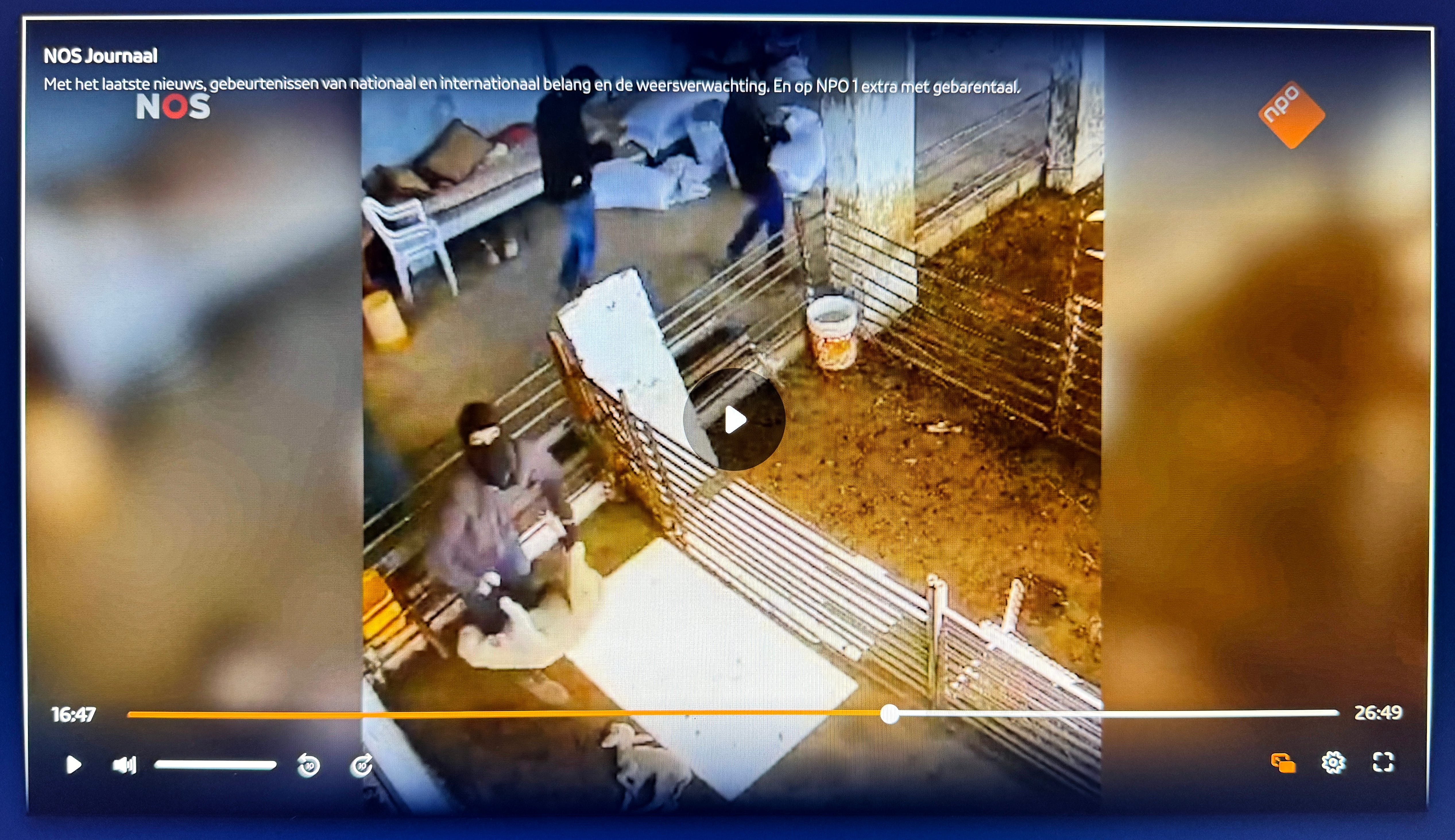
The NOS had referred to the footage earlier that day in an article on rising settler violence (“Terreur Joodse kolonisten neemt toe”, 21 November 2025). They noted that activists and Palestinians try to capture such attacks on camera because hardly any lead to any legal consequences. The footage in the broadcast came from the farmer’s own security system and had circulated on X, where it was shared by Israeli journalist Nurit Yohanan.
In the broadcast it lasted only a few seconds. But those seconds tore through me.
Accumulation, Not Shock
I don’t think it was the footage alone that caused the fracture.
It was the accumulation.
Months of watching a world that appears to be drifting toward something unrecognizable. Months of numbers rising on the bottom of screens: dead, displaced, missing, starved. Months of clips, drone footage, phone recordings, satellite shots — all the raw pixels of violence.
We are exposed to carnage at a distance close enough to wound us, but too far away for us to intervene. It creates a uniquely corrosive kind of helplessness.
Standing in my safe living room, the news moving briskly to the next segment, I felt that helplessness harden into something heavier. I didn’t know where to put the emotions the footage had provoked. I didn’t know what to do with the moral weight of watching animals slaughtered by people who will never face consequences. And I didn’t know how to remain present in a world whose brutality keeps escalating.
On Withdrawing Without Disconnecting
For months now, I’ve felt myself withdrawing — quietly, gradually — not because I care less, but because caring without any agency is a slow suffocation.
I don’t want to become numb.
I don’t want to look away.
But I also can’t take in every violent image and remain intact.
So I’m asking myself new questions:
What does ethical engagement look like when constant witnessing erodes your ability to stay grounded?
What does it mean to stay informed without collapsing under the information?
I don’t have answers.
What I felt last night was not an awakening, but a breaking point.
And right now, the only honest response I have is to step back enough to breathe.
Withdrawal, for me, is not apathy.
It is triage.
A necessary slowing-down so I can eventually return not numb, not hardened, but capable again of clarity, responsibility, and presence.
A World That Still Needs Witnesses
Despite everything, the world still demands witnesses. But witnesses also need room — emotional, mental, and physical — to recover from what they see.
The violence continues whether we look at it or not.
But the quality of our looking matters.
If we are constantly overwhelmed, the only thing we pass on is despair. If we are careful with our capacity — honest about our limits — maybe we can stay human enough to remain useful.
That is what I’m hoping for.
Not silence. Not numbness.
But a recalibrated way of facing the world.
How Do You Deal with This Reality?
I’m asking this seriously, and without cynicism.
How do you handle the constant stream of violence, injustice, and cruelty the world serves us every day?
Do you withdraw? Do you limit what you watch? Do you engage more deeply?
How do you protect your mind while staying connected to the world?
I would truly like to know.